Trezor Login: How to Access Your Trezor Wallet Safely
Cryptocurrency security starts with the right hardware wallet, and Trezor is one of the most trusted solutions for protecting digital assets. Whether you have a Trezor Model One or Trezor Model T, understanding the Trezor login process is essential. Unlike traditional online accounts, Trezor does not use usernames or passwords. Instead, it relies on a physical device, a PIN, and a recovery seed to provide secure access to your cryptocurrency. This guide explains how to log in to Trezor, common issues you may encounter, and best practices for keeping your wallet secure.
What Trezor Login Actually Is
Many new users assume that Trezor login works like logging into a website. In reality, Trezor login involves connecting your hardware wallet to Trezor Suite, the official application for managing your device, and entering your PIN on the device. This process authenticates your device and allows you to view accounts, check balances, and perform transactions—all without exposing private keys online.
The Trezor login process can be summarized as:
Launching Trezor Suite on your computer or mobile device.
Connecting your Trezor hardware wallet.
Entering your PIN on the device.
Allowing Trezor Suite to verify your wallet and display your accounts.
Because all sensitive operations occur on the device itself, Trezor login provides strong security while remaining simple to use.
What You Need Before Logging In
To complete a Trezor login successfully, you need the following:
A genuine Trezor hardware wallet (Model One or Model T)
Your device PIN, set during initial setup
Trezor Suite installed on your computer or mobile device
A USB cable to connect your device
Your recovery seed stored safely offline
While the recovery seed is not required for daily login, it is essential for recovering your wallet if your device is lost or damaged.
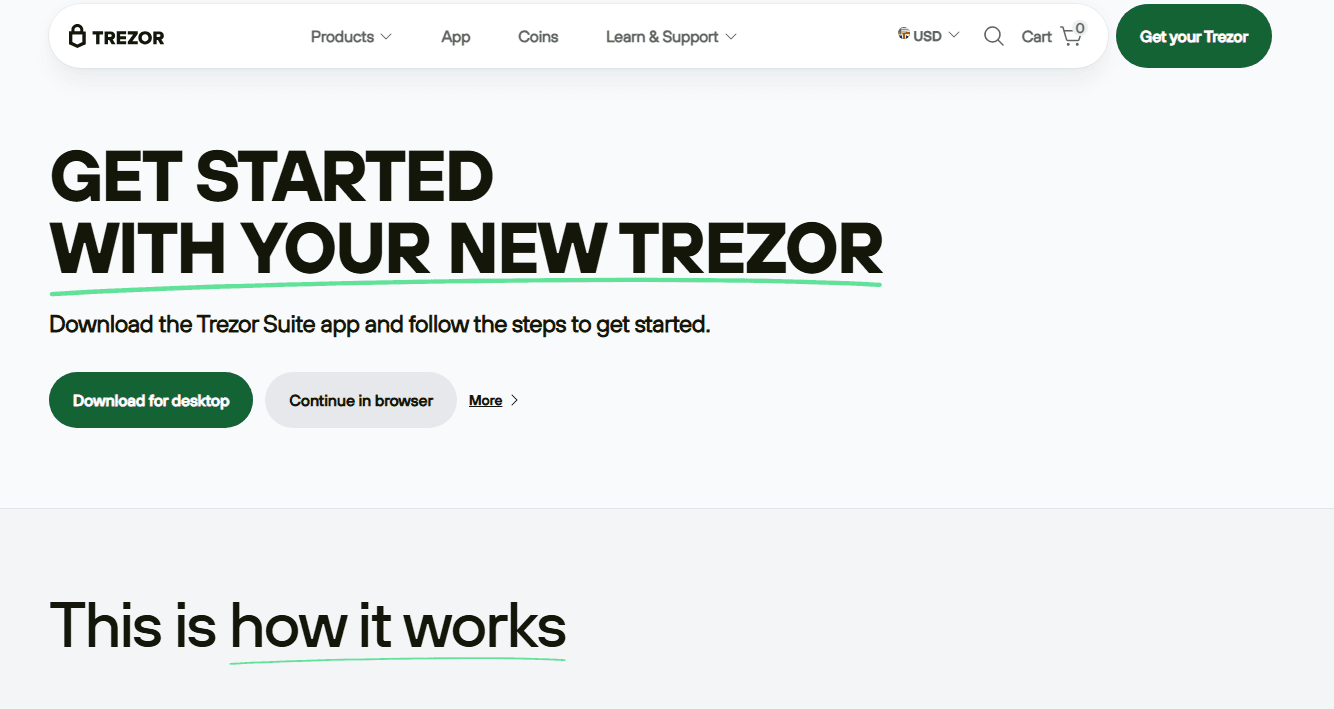
Installing Trezor Suite
Trezor Suite is the official software for managing your hardware wallet. It allows you to access accounts, view balances, send and receive cryptocurrency, and adjust device settings.
To install Trezor Suite safely:
Go to the official Trezor website.
Download the version that matches your operating system (Windows, macOS, Linux, Android, or iOS).
Install the application following the on-screen instructions.
Open Trezor Suite and prepare your device for connection.
Avoid downloading Trezor Suite from unofficial sources, as counterfeit software can compromise your funds.
Step-by-Step Trezor Login Process
After installing Trezor Suite, follow these steps to log in:
Launch Trezor Suite.
Connect your Trezor hardware wallet using the USB cable.
Enter your PIN on the physical device.
Trezor Suite verifies the device and ensures it is genuine.
Once verified, your accounts, balances, and portfolio information appear in Trezor Suite.
All sensitive operations, including signing transactions, occur on the hardware wallet, ensuring your private keys never leave the device.
Why Trezor Uses Device-Based Login
Trezor avoids traditional online logins to provide maximum security. By keeping private keys offline and requiring physical PIN entry, Trezor prevents unauthorized access even if your computer is compromised. Key benefits of this approach include:
Offline private key storage to reduce exposure to online threats.
PIN protection to prevent access if the device is lost or stolen.
Transaction approval on the device ensures that only the owner can authorize transfers.
Passphrase support adds an extra security layer for advanced users.
This method makes Trezor login safer than web-based wallets or exchange accounts that rely on passwords.
Common Issues with Trezor Login
While Trezor login is straightforward, some users may experience issues:
Device Not Recognized
Try a different USB port or cable.
Restart Trezor Suite.
Update the device firmware.
Incorrect PIN
Entering the wrong PIN repeatedly locks the device temporarily. If you forget your PIN, the only solution is restoring your wallet with the recovery seed.
Firmware Updates
Trezor Suite may prompt for firmware updates. Follow the instructions carefully while keeping the device connected.
Connection Problems
If the device is not detected:
Reconnect the USB cable.
Restart the computer or mobile device.
Ensure Trezor Suite is up to date.
Security Best Practices for Trezor Login
To protect your wallet and maintain secure access:
Store your recovery seed offline on paper or metal. Never store it digitally or take a photo.
Never share your recovery seed. Legitimate support will never ask for it.
Always use official Trezor Suite software downloaded from Trezor.io.
Update firmware regularly to maintain security.
Use a strong, unique PIN and consider enabling a passphrase for additional protection.
Keep your hardware device secure to prevent unauthorized access.
Managing Your Wallet After Login
Once logged in, Trezor Suite provides a wide range of features:
Manage multiple cryptocurrency accounts.
Send and receive funds securely.
Track your portfolio and balances in real time.
Install or remove apps on the device.
Access advanced security settings, including passphrase protection.
All transactions require confirmation on the physical device, ensuring that only the device owner can authorize actions.
Conclusion
The Trezor login process combines simplicity with top-level security. By using a hardware device with offline key storage, PIN authentication, and optional passphrase protection, Trezor ensures that your cryptocurrency remains safe from hackers and online threats. Understanding how to log in correctly, handling your recovery seed securely, and following best practices allows you to manage your digital assets confidently and safely. With Trezor, your wallet remains under your full control at all times.