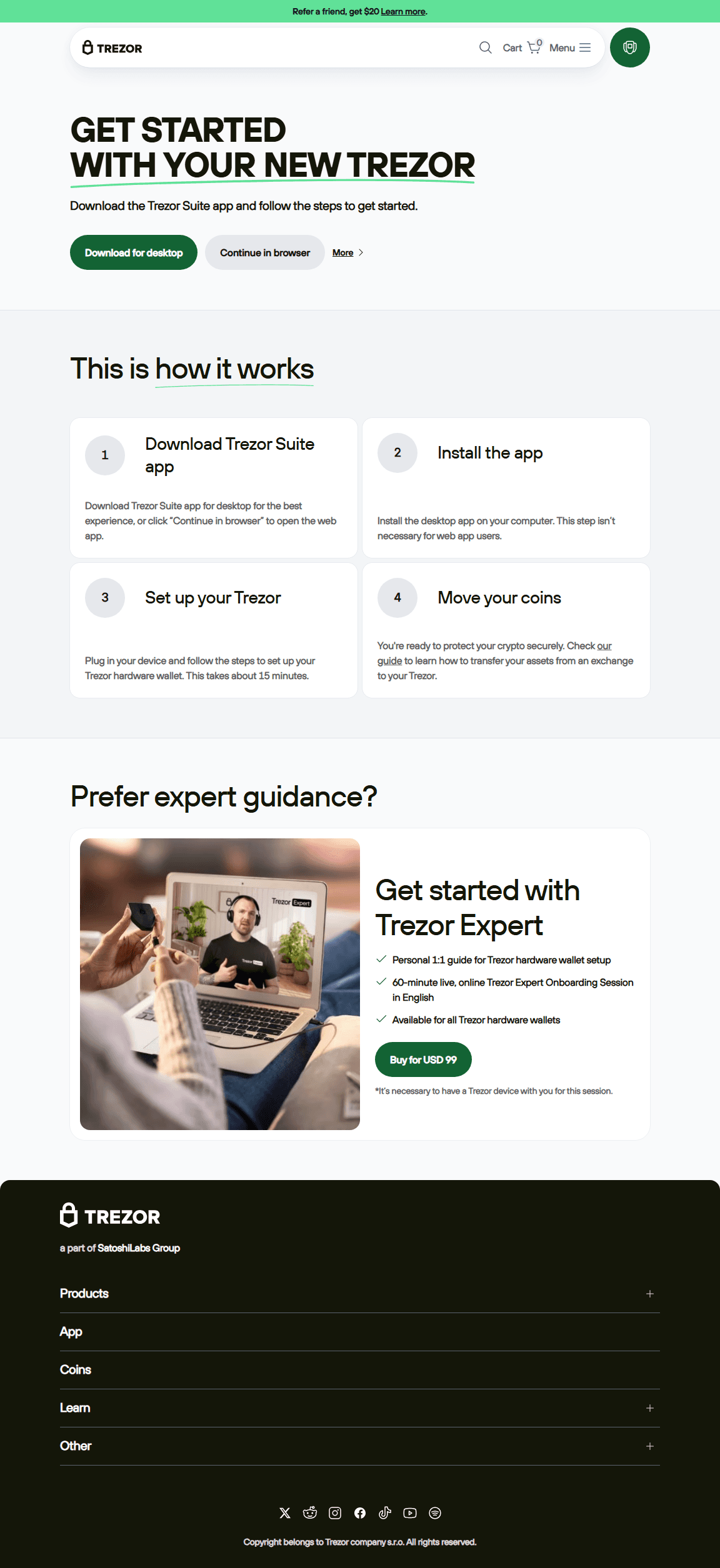
Trezor Login: Accessing Your Trezor Wallet Securely
Managing cryptocurrency safely requires the right tools, and Trezor hardware wallets are among the most trusted solutions for securing digital assets. Whether you use a Trezor Model One or Trezor Model T, understanding the Trezor login process is essential for securely accessing your funds. Unlike traditional online accounts, Trezor does not use usernames or passwords. Instead, it relies on a hardware device, a PIN, and a recovery seed to ensure the safety of your crypto. This guide explains the Trezor login process, common issues, and security best practices.
What Trezor Login Means
Unlike standard online accounts, Trezor login does not involve typing in an email or password. Instead, login refers to connecting your Trezor device to the official Trezor Suite application and unlocking it with your PIN. Trezor login allows you to access your wallet, manage accounts, and perform transactions while keeping private keys offline.
The typical Trezor login process involves:
Opening Trezor Suite on your computer or mobile device.
Connecting your Trezor hardware wallet via USB or compatible cable.
Entering the PIN on the physical device.
Authenticating the device so that Trezor Suite can display your accounts.
This design keeps your private keys secure on the device while providing easy access to your crypto through a trusted interface.
What You Need Before Logging In
Before attempting a Trezor login, ensure you have:
A Trezor hardware wallet (Model One or Model T)
Your device PIN, created during the initial setup
Trezor Suite installed on your computer or mobile device
A USB cable to connect your device
Your recovery seed safely stored offline
Your recovery seed is not required for daily login but is essential for restoring your wallet in case of loss or device failure.
Installing Trezor Suite
Trezor Suite is the official software interface for managing your Trezor wallet. It allows you to access your accounts, track balances, send and receive crypto, and manage device settings.
To install Trezor Suite safely:
Visit the official Trezor website.
Download the version compatible with your operating system (Windows, macOS, Linux, Android, or iOS).
Install the application following on-screen instructions.
Launch Trezor Suite and prepare your device for connection.
Avoid downloading Trezor Suite from third-party websites, as unofficial copies can contain malware and compromise your wallet.
Step-by-Step Trezor Login Process
Once Trezor Suite is installed, follow these steps to log in:
Open Trezor Suite on your computer or mobile device.
Connect your Trezor device using the USB cable.
Enter your PIN on the hardware wallet when prompted.
Trezor Suite will verify the device’s authenticity.
Once verified, your accounts and portfolio information will appear in Trezor Suite.
All sensitive operations, including transaction approval, occur on the device itself, ensuring your private keys never leave the hardware wallet.
Why Trezor Uses Device-Based Login
Trezor does not rely on cloud-based passwords or online logins. Instead, the device-based login provides several advantages:
Offline private keys prevent exposure to online threats.
PIN protection prevents unauthorized access if the device is lost or stolen.
Transaction confirmation on the device ensures only the wallet owner can approve transfers.
Passphrase support adds an extra layer of security for advanced users.
This approach makes Trezor login more secure than software wallets or exchange accounts, as no sensitive information is stored on a server.
Common Trezor Login Issues and Solutions
Even though Trezor login is straightforward, users may encounter challenges. Common issues include:
Device Not Detected
Try a different USB port or cable.
Restart Trezor Suite.
Update the device firmware if prompted.
Incorrect PIN
Repeatedly entering the wrong PIN can temporarily lock the device. If the PIN is forgotten, the wallet must be restored using the recovery seed.
Firmware Outdated
Trezor Suite may require a firmware update. Follow instructions carefully and do not disconnect the device during the update.
Connection Problems
If the device is not recognized:
Disconnect and reconnect the USB cable.
Restart your computer or mobile device.
Ensure Trezor Suite is up-to-date.
Security Best Practices for Trezor Login
To maintain long-term security for your wallet:
Store your recovery seed offline. Avoid digital copies or photographs.
Never share your recovery seed. Legitimate support will never ask for it.
Use only official Trezor Suite software downloaded from Trezor.io.
Update firmware regularly to receive security improvements.
Use a strong PIN and consider enabling an optional passphrase for added protection.
Store your hardware wallet securely to prevent unauthorized access.
Following these practices ensures your Trezor login remains safe and your funds secure.
Using Trezor Suite After Login
Once logged in, Trezor Suite provides a range of features:
Add and manage multiple cryptocurrency accounts.
Send and receive digital assets securely.
Track portfolio values in real time.
Install or remove apps on the Trezor device.
Enable advanced security features, including passphrase protection.
All transactions must be confirmed on the physical device, ensuring you remain in full control of your assets.
Conclusion
The Trezor login process combines simplicity and robust security. By using a hardware device with PIN-based access and optional passphrase protection, Trezor keeps your private keys offline and secure. Understanding how to log in correctly, handle your recovery seed, and follow best security practices ensures your cryptocurrency remains protected from hackers and other threats. With these precautions, Trezor users can confidently manage their digital assets through one of the most trusted hardware wallet platforms available.